Dr. Gymbro
←

#countermovement jump

2 articles
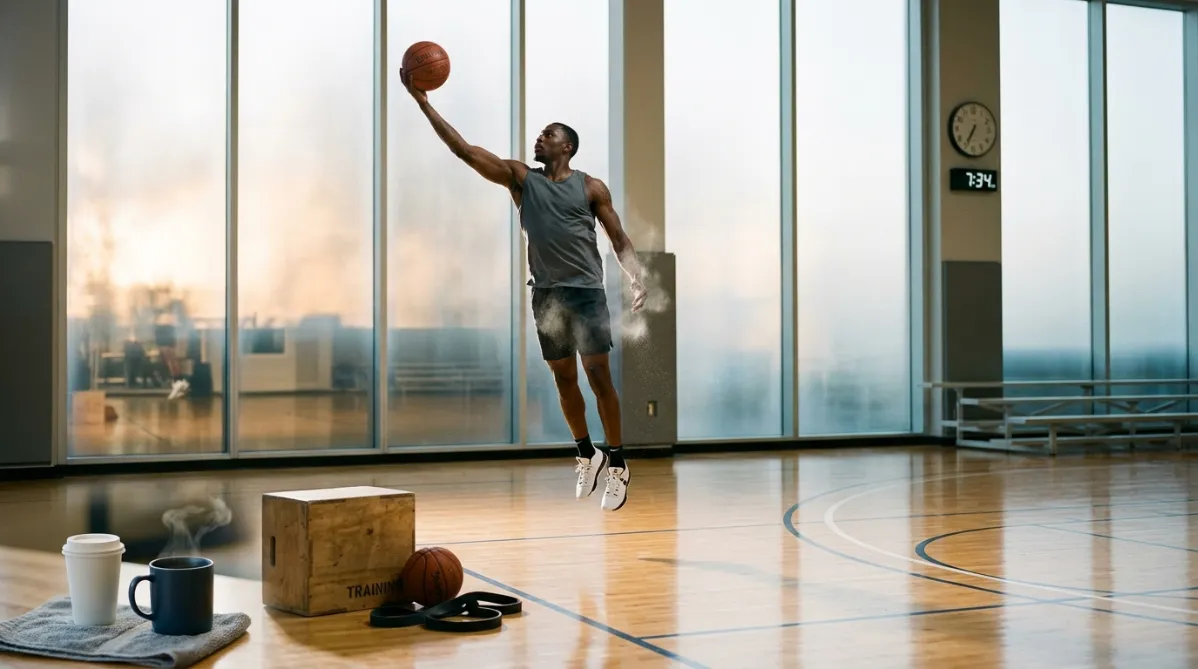
A wide, editorial-style photograph of a basketball player mid-air at the top of a vertical jump inside a sunlit indoor court, shot from a low angle so the athlete's silhouette rises against tall frosted windows glowing with soft morning light. The player wears a plain charcoal tank and white sneakers, with chalk dust drifting off their hands and catching the light. The polished honey-toned hardwood floor reflects the figure faintly, with crisp painted court lines leading the eye across the frame.

In the foreground at the lower left, slightly out of focus, a small wooden plyometric box sits on the floor beside a matte ceramic cup of black coffee and a plain white paper cup, placed neatly on a folded gray towel. Thin steam curls from the ceramic cup. They stand for the question of caffeine versus warm-up without any text or labels.

The color palette is calm and modern: warm amber wood, soft cream, muted slate blue shadows, and a touch of burnt orange from a basketball resting near the box. Light is natural and diffused, with gentle rim lighting on the athlete's shoulders and a shallow depth of field that blurs the background bleachers into creamy shapes. The composition has generous negative space on the right third, suited to a headline overlay, in a clean, contemporary magazine style with fine film grain, subtle contrast, and a quiet, focused mood. No text, no logos, no futuristic elements.
science research

La cafeína antes de los saltos no aportó nada extra; el calentamiento hizo el trabajo

BY DR. GYMBRO ·

Una combinación de cafeína y un calentamiento con saltos en caída parecía una receta para saltos más altos, pero un ensayo con jugadores de baloncesto de élite demostró que el café no añadió ningún beneficio adicional. El protocolo individualizado de salto generó por sí solo un impulso de corta duración. La dosis de 3 mg/kg de cafeína no modificó la altura máxima, el tiempo de pico ni el PAPE total en comparación con el placebo. Las respuestas individuales fueron muy variables, de modo que algunos atletas pueden reaccionar de forma distinta. Aquí analizamos qué muestra el estudio, qué no muestra y cómo diseñar tu propio protocolo de salto.
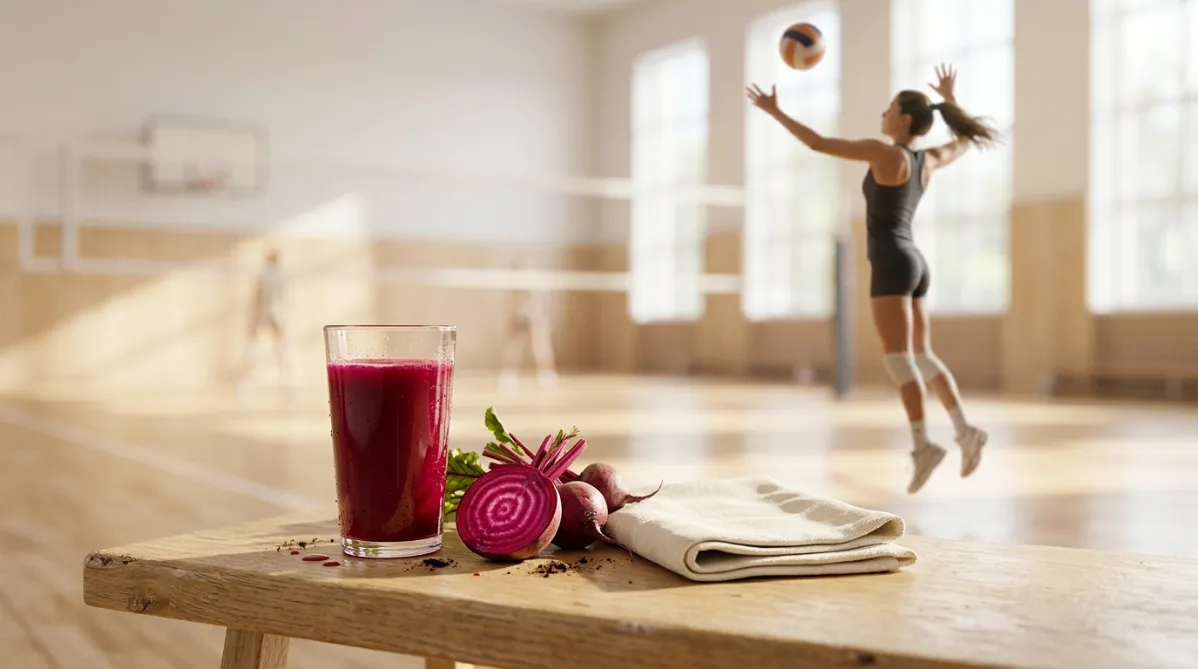
A wide, editorial-style photograph of a deep magenta glass of beetroot juice standing on a pale oak gym bench in soft morning light. Beside it sit a halved raw beetroot with vivid fuchsia and white concentric rings, a few whole beets with leafy stems, and a folded cream towel. Behind them, slightly out of focus, a female volleyball player in a fitted charcoal athletic set is caught mid-jump on an indoor court. Her arms are raised, her ponytail lifts, and a volleyball hangs near her fingertips. The polished wooden court floor reflects warm light from tall windows. The background fades into a creamy blur of pale wood tones, soft white walls, and hints of a net.

The composition follows a rule-of-thirds layout. The juice and beets fill the lower left third in crisp focus, and the jumping athlete is the softly blurred focal point on the right. Fine condensation beads on the glass, and a few juice droplets rest on the bench like small jewels. The palette is limited and modern: rich beet magenta, warm honey wood, soft off-white, and charcoal accents. The light is natural and diffused with gentle long shadows. The shallow depth of field suggests a high-end lifestyle and health magazine. The look is clean and minimal with plenty of negative space in the upper left for a title overlay. The mood is energetic yet calm, hinting at recovery and bounce. It has fine film-like texture and true-to-life color, with no text, logos, or futuristic elements.
nutrition

Jugo de remolacha y altura de salto: ¿el tercer día recupera el rebote?

BY DR. GYMBRO ·

Doscientos saltos con carga dejan las piernas destrozadas, pero ¿el jugo de remolacha puede devolver el rebote al tercer día? Un ensayo cruzado en jugadoras de voleibol mostró una mayor altura de salto a las 72 h y una mejor tolerancia al dolor en la pantorrilla tras consumir el jugo. El dolor muscular, la agilidad, la hinchazón y la mayoría de las medidas de fuerza no cambiaron, y la interacción global del salto fue solo una tendencia. Este artículo desglosa los hallazgos, cómo los atletas podrían usar el jugo tras trabajos pliométricos intensos y por qué la pequeña muestra exclusivamente femenina exige cautela.

This page is available in